
When people think about solar energy, they often picture rows of solar panels on a roof. While solar panels are an essential part of any photovoltaic (PV) system, they're only one piece of a much bigger picture.
Today's most successful energy projects aren't simply designed to generate electricity, they're designed to generate value. A truly intelligent solar system combines generation, storage, monitoring and energy management to help businesses reduce costs, improve resilience and make better energy decisions.
The question is no longer, "How many solar panels do I need?" It's "How can my energy system work smarter?"
It Starts with Understanding Your Energy Needs
Every business consumes energy differently.
A warehouse may have consistent daytime loads, while a manufacturing facility experiences significant demand peaks. Agricultural operations often have seasonal consumption patterns, and office buildings may require greater backup capability during business hours.
Understanding how and when your business uses energy is the foundation of a successful solar project. Before selecting equipment, it's important to analyse:
- Daily and seasonal energy consumption
- Peak demand periods
- Critical loads that require uninterrupted power
- Future expansion plans
- Operational priorities
Designing around your actual energy profile ensures the system delivers maximum long-term value.
Solar Generation Is Only the Beginning
Solar panels convert sunlight into clean energy, reducing dependence on the grid and lowering electricity costs.
However, energy production doesn't always align perfectly with energy demand.
Cloud cover, changing weather conditions and varying energy consumption throughout the day all influence system performance.
This is why modern solar systems are increasingly designed as integrated energy ecosystems rather than standalone generation systems.
This is exactly the approach behind the Huawei FusionSolar ecosystem. Rather than treating solar generation, battery storage and energy management as separate technologies, Huawei has developed an integrated platform where every component works together seamlessly. The result is a smarter, more efficient energy system that gives businesses greater visibility, control and long-term flexibility.
Intelligent Inverters: The Heart of the System
If solar panels are the engine, the inverter is the brain.
Modern inverters do far more than convert DC energy into usable AC energy. They continuously monitor system performance, optimise energy production and communicate with other components throughout the energy system.
Advanced inverter technology also enables businesses to integrate battery storage, monitor energy flows and adapt to changing operating conditions, all from a single platform.
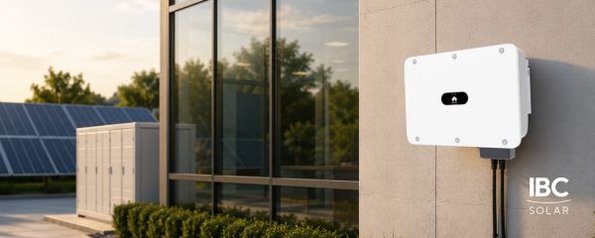
Huawei's SUN2000 inverter range has been designed with this intelligence at its core. More than simply converting energy, Huawei inverters communicate continuously with the broader FusionSolar ecosystem, optimising energy production, supporting battery storage, enabling real-time monitoring and preparing businesses for future expansion. This intelligent integration helps businesses maximise the value of every kilowatt-hour they generate.
Adding Battery Storage for Greater Flexibility
Battery energy storage has transformed the role of commercial solar.
Instead of using solar energy only when it is generated, businesses can store excess energy for later use.
This provides several advantages:
- Increased energy independence
- Improved resilience during grid interruptions
- Reduced reliance on expensive peak-period electricity
- Better utilisation of solar generation
- Greater operational flexibility
Battery storage also creates opportunities to optimise energy use throughout the day, helping businesses get more value from every kilowatt-hour they generate.
Visibility Creates Opportunity
One of the biggest differences between traditional and intelligent solar systems is visibility.
Real-time monitoring allows businesses to understand exactly how their system is performing, including:
- Energy production
- Energy consumption
- Battery status
- System health
- Historical performance trends
- Potential faults or performance issues
Rather than waiting for problems to occur, businesses can proactively manage their energy infrastructure and identify opportunities for continuous improvement.
Why Huawei FusionSolar Makes the Difference
A smarter solar system is one where every component works together.
Instead of managing separate devices independently, integrated platforms connect generation, storage and monitoring into one intelligent ecosystem.
Huawei FusionSolar was developed around the idea that businesses shouldn't have to manage separate technologies independently. Instead, Huawei brings together high-efficiency inverters, battery energy storage, intelligent monitoring and smart energy management into one connected ecosystem.
This integrated approach enables businesses to optimise energy production, improve operational efficiency, gain complete visibility of system performance and build an energy infrastructure that can scale as business requirements evolve. Rather than adding individual products over time, organisations benefit from a platform designed to grow with them.
For businesses, this means:
- Simplified system management
- Better visibility across all energy assets
- Faster issue identification
- Improved operational efficiency
- A scalable platform that grows with future energy requirements
The result is a more streamlined and effective approach to energy management.
Planning for Tomorrow, Not Just Today
Business requirements change over time.
A company may expand production, add electric vehicle charging infrastructure, increase storage capacity or introduce new technologies that place additional demands on its electrical system.
Designing a solar system with scalability in mind helps protect today's investment while ensuring the infrastructure can adapt as the business evolves.
Future-ready systems reduce the need for costly redesigns and create greater long-term flexibility.
Choosing the Right Partner
Technology is only part of a successful project.
A well-designed solar system depends on careful planning, quality engineering and ongoing technical support.
Working with an experienced partner helps ensure the solution is tailored to your operational goals, designed for long-term performance and supported throughout its lifecycle.
The right partner will focus not only on the products themselves, but on creating an energy solution that delivers measurable business value.
Final Thoughts
Building a smarter solar system is about more than generating renewable energy, it's about choosing technology that continues to deliver value long after installation.
With integrated solutions such as Huawei FusionSolar, businesses can combine high-efficiency solar generation, intelligent inverters, battery storage, real-time monitoring and smart energy management into one connected platform. The result is greater efficiency, improved resilience and better energy decisions every day.
As businesses continue to rethink their energy strategy, investing in an intelligent ecosystem rather than individual components will be the key to long-term success.