
Why resilience is becoming one of business's greatest competitive advantages
Business resilience is no longer just about preparing for unexpected events.
It's about having the confidence to operate, grow and adapt in an increasingly complex energy landscape.
As energy costs continue to rise, grid instability remains a reality and sustainability expectations increase, businesses are looking beyond traditional backup power. They're investing in intelligent energy ecosystems that improve operational continuity while creating long-term business value.
The conversation has shifted from simply generating energy to building a smarter, more resilient business.
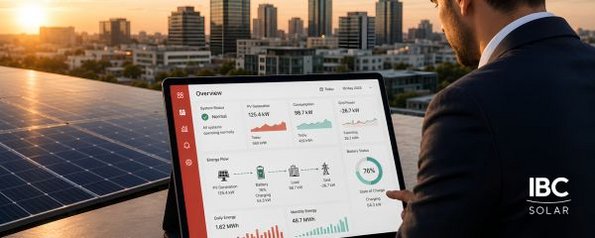
Resilience Starts with Visibility
A resilient business understands its energy.
Knowing when energy is generated, where it's consumed and how it's managed allows organisations to make better operational decisions every day.
Real-time visibility helps businesses:
- Optimise energy consumption
- Reduce peak demand
- Improve battery utilisation
- Identify performance issues early
- Make informed investment decisions
Rather than reacting to problems, businesses gain the ability to anticipate and adapt.
More Than Backup Power
Many organisations still associate resilience with keeping the lights on during load shedding.
While backup capability remains important, resilience today means much more.
A resilient energy system helps businesses:
- Reduce dependence on the grid
- Improve operational continuity
- Lower long-term electricity costs
- Increase energy independence
- Improve energy quality
- Support sustainability objectives
- Prepare for future expansion
These outcomes are achieved through intelligent system design, not by a single component, but by an integrated solution.
An Intelligent Energy Ecosystem
Modern commercial solar projects combine multiple technologies into one connected platform.
High-efficiency solar generation, intelligent inverters, battery energy storage, real-time monitoring and advanced energy management all work together to maximise system performance.
This integrated approach allows businesses to optimise energy flows automatically while providing complete visibility into how the system operates.
When every component communicates with the others, the result is greater efficiency, improved reliability and better business outcomes.
‘
Why Integration Matters
Managing separate technologies independently can create unnecessary complexity.
Integrated platforms simplify energy management by bringing every component together into one ecosystem.
Solutions such as Huawei FusionSolar combine:
- High-efficiency commercial inverters
- Intelligent battery energy storage
- Real-time monitoring and analytics
- AI-powered energy management
- Centralised system management through a single platform
By integrating these technologies, businesses gain greater visibility, faster fault detection, improved system optimisation and a solution designed to scale as energy requirements evolve.
Instead of managing products, organisations manage one intelligent energy ecosystem.
Building for Tomorrow
Energy requirements rarely remain the same.
Businesses expand.
Production increases.
Electric vehicle charging is introduced.
Additional storage capacity may become necessary.
Choosing a scalable platform from the outset makes it easier to adapt without redesigning the entire energy infrastructure.
Huawei's commercial and utility-scale solutions are designed with this future in mind, enabling businesses to expand their systems as operational requirements change.
Future-ready infrastructure protects today's investment while supporting tomorrow's growth.
Technology Is Only Part of the Solution
Even the most advanced technology depends on good system design, quality engineering and ongoing support.
That's why choosing the right implementation partner is just as important as selecting the right technology.
Working with experienced partners ensures every system is designed around the customer's operational goals, not simply around equipment specifications.
Combined with trusted technology platforms such as Huawei FusionSolar, businesses gain an energy solution designed for long-term performance, reliability and growth.
The Competitive Advantage
Businesses investing in intelligent energy ecosystems today aren't simply reducing electricity costs.
They're building organisations that are:
- More resilient
- More efficient
- Better informed
- More sustainable
- Better prepared for future growth
Energy has become one of the few operational areas where businesses can simultaneously improve financial performance, operational resilience and sustainability.
That makes it far more than an expense.
It becomes a competitive advantage.
The future of business energy isn't defined by individual products.
It's defined by intelligent ecosystems where generation, storage, monitoring and management work seamlessly together.
Solutions such as Huawei FusionSolar, supported by experienced partners like IBC SOLAR, enable businesses to move beyond simply installing solar.
They help organisations build resilient, connected and future-ready energy infrastructure that delivers value long after installation is complete.
Because resilience isn't just about responding to change.
It's about being ready for it.