

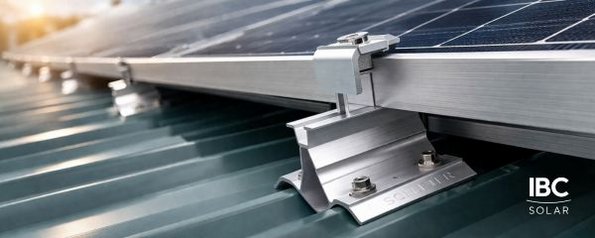
How smart mounting design improves efficiency on-site
In today’s solar market, efficiency is no longer a competitive advantage, it’s an expectation.
Installers are under increasing pressure to complete more projects in less time, while maintaining high standards of quality and long-term system performance. The challenge is clear, how do you speed up installation without introducing risk?
The answer often lies in a part of the system that is often overlooked: the mounting structure.
Where Time Is Really Lost on Site
Installation delays rarely come from a single major issue. Instead, they are the result of small inefficiencies that compound over time:
- Complex or inconsistent component systems
- Excessive loose parts and hardware
- Poor fit between mounting solutions and roof types
- Time spent adjusting or correcting alignment
- Unclear installation sequences
These factors don’t just slow teams down, they increase the likelihood of errors, rework, and long-term reliability issues.
The Role of Smart Mounting Design
Well-designed mounting systems are not just about structural integrity, they are about simplifying the entire installation process.
When mounting systems are engineered with installers in mind, the impact on-site is immediate:
1. Fewer Components, Faster Assembly
Systems that reduce the number of individual parts minimise handling time and complexity. Pre-assembled or integrated components allow installers to move faster without sacrificing accuracy.
2. Standardised Connections
Consistent interfaces across different roof types and system components eliminate guesswork. Installers can work more confidently, knowing each part fits as expected.
3. Adaptability to Real-World Conditions
No two roofs are the same. Mounting solutions that allow for quick adjustments, without additional tools or modifications, reduce time spent problem-solving on-site.
4. Repeatable Installation Processes
The more predictable the system, the easier it is to train teams and replicate quality across multiple projects. Repeatability is key to scaling operations efficiently.
Speed Without Sacrificing Quality
There is often a misconception that faster installations mean lower quality. In reality, the opposite is true when the right systems are used.
Efficient mounting design helps ensure:
- Correct load distribution
- Secure and consistent fixing points
- Proper alignment of modules
- Reduced risk of installation errors
By simplifying the process, installers are able to focus on precision rather than troubleshooting.
The Impact on Project Delivery
Improving installation efficiency has a direct impact on overall project performance:
- Shorter installation timelines
- Lower labour costs per project
- Increased project capacity
- Improved consistency across installations
For installers and EPCs, this translates into stronger margins and the ability to take on more work without increasing risk.
From Theory to Practice
This is where the choice of mounting system becomes critical.
Solutions like Schletter mounting systems are designed with these exact challenges in mind, reducing complexity on-site while maintaining the structural integrity required for long-term performance.
From rooftop to ground-mount applications, the focus is on:
- Streamlined component design
- Fast, intuitive installation
- Reliable performance across different roof types
- Consistent system integration
For installers, this means less time spent figuring things out on-site, and more time executing with confidence.
Building for Long-Term Performance
Efficiency on-site should never come at the cost of long-term reliability.
With systems like Schletter, the same design principles that improve installation speed also support:
- Structural stability
- Environmental durability
- Compliance with local conditions
The result is not just faster installations, but better ones.
Reducing installation time is not about working harder on-site, it’s about working smarter with the right systems.
Mounting design plays a critical role in this shift, enabling installers to deliver faster, more consistent, and higher-quality installations.
And when the right system is in place, from planning through to installation, efficiency and quality no longer need to be a trade-off.