
Understanding current market dynamics and what it means for your projects
The global solar PV market is currently experiencing an unusual period of price volatility and supply uncertainty. While demand for solar solutions continues to grow, a combination of policy changes, raw material pressures, and production controls upstream is making it increasingly difficult to secure module supply at fixed prices over extended periods.
This notice aims to provide transparency around the current market conditions and explain why pricing, availability, and delivery timelines have become more challenging across the industry.
What is driving the current volatility?
1. Production controls in China
According to sources in our Top 5 manufacturers, production levels are being actively constrained, with total annual output expected to be reduced to below 500 GW, compared to approximately 1 TW previously. These measures are intended to stabilise the domestic manufacturing sector but have a direct impact on global module availability.
Reduced output at this scale inevitably tightens supply and increases competition for available stock.
2. Export tax rebate removal from April 2026
One of the most significant cost drivers is the removal of Chinese export VAT rebates on PV wafers, cells, and modules.
- Export rebates were already reduced from 13% to 9% in December 2024
- From 1 April 2026, export VAT rebates on PV modules will be reduced to 0%
This change alone represents a structural increase in module pricing for international buyers and is expected to have a lasting impact on landed costs.
3. Accelerated short-term production ahead of April
In response to the rebate changes, manufacturers are prioritising production in Q1 2026, with some indicating plans to manufacture up to 60% of their adjusted annual output before April to take advantage of the remaining rebate window.
While this may create short-term volume availability, it also introduces:
- Highly dynamic pricing
- Short quotation validity periods
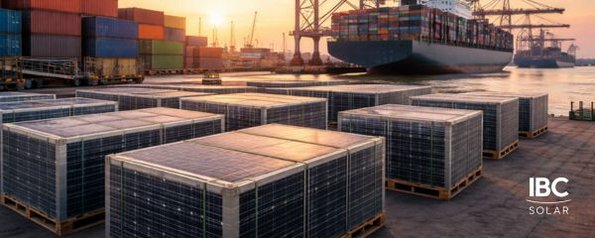
- Increased pressure on logistics and shipping capacity
4. Raw material cost escalation
Module pricing is being further impacted by sharp increases in key raw materials, including:
- Silver (over 220% year-on-year increase)
- Polysilicon
- Aluminium and copper
Together, these materials account for over 40% of total module cost, meaning simultaneous price increases translate rapidly into higher module prices.
5. Pricing validity reduced to 24–48 hours
Due to the above factors, many suppliers are now only able to honour pricing for 24 to 48 hours. In some cases, prices are being revised daily, making long-term budget commitments increasingly difficult without early confirmation.
6. Higher deposits and volume uncertainty
To secure production slots, manufacturers are increasingly requiring deposits of 40% or more. Even then, volumes and shipping dates cannot always be guaranteed, particularly for large-scale or time-sensitive projects.
7. Shipping and logistics constraints
While some manufacturers will continue production and shipping through the Chinese New Year period, logistics timelines remain fluid. Shipping schedules, freight costs, and port congestion continue to introduce uncertainty into delivery planning.
What does this mean for project planning?
In the current market environment:
- Early commitment is critical to securing both price and volume
- Budgets should include contingency allowances for price movement
- Pricing assumptions may need more frequent review during project development
- Currency movements (e.g. ZAR/USD) may temporarily offset increases, but should not be relied on as a long-term mitigation strategy
Industry analysis suggests that Q1 2026 represents one of the final windows to secure module supply under current rebate conditions, before structural price increases take effect.
Our commitment
We remain committed to:
- Providing transparent, up-to-date market intelligence
- Communicating pricing changes as early as possible
- Working closely with partners to optimise logistics, sourcing, and timing
- Supporting clients with informed decision-making during this volatile period
As conditions continue to evolve, we will share updates as soon as new information becomes available.
Please reach out to your account manager if you would like to discuss project timelines, pricing strategy, or risk mitigation options in more detail.